
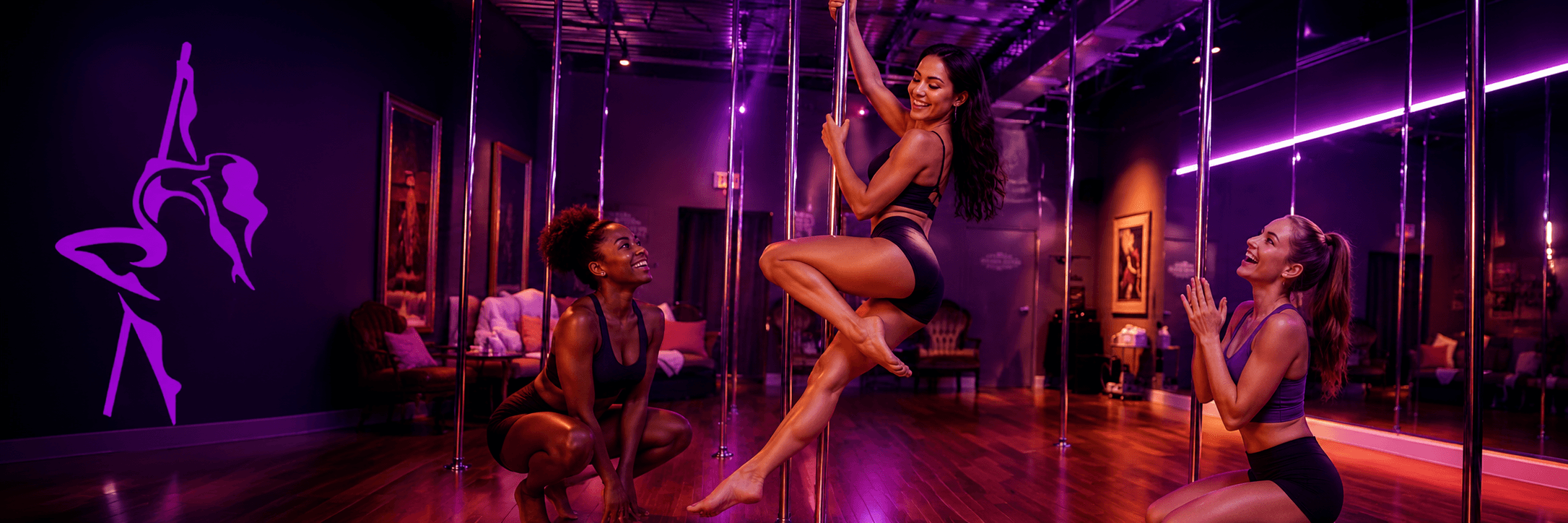
Is Pole Dancing Hard to Learn for Beginners? The Truth About Getting Started
Wondering if pole dancing is too difficult to start as a beginner? Discover what actually makes pole dancing achievable for anyone willing to try, regardless of starting fitness level.
If you've been curious about pole dancing but worried it might be too hard, you're not alone. Many people stand on the sidelines wondering whether they have what it takes to learn this dynamic fitness discipline. The honest answer is that pole dancing has a learning curve, but it's absolutely learnable for beginners—and it's far more accessible than most people think.
THE TRUTH ABOUT POLE DANCING DIFFICULTY
Pole dancing isn't hard in the way that, say, learning to play violin is hard. You won't need years of prior experience or natural talent to start enjoying the basics. What pole dancing does require is patience, consistent practice, and a willingness to challenge yourself physically and mentally. The difficulty level is manageable when you start with realistic expectations and work with qualified instructors who know how to scale movements for beginners.
The first few classes might feel awkward. Your body is learning new movement patterns, new strength requirements, and new spatial awareness. But here's what makes it less intimidating than you might imagine: every single person in a beginner pole dancing class is in the same boat. You're all discovering your capabilities together, celebrating small wins, and supporting each other through the learning process.
WHAT MAKES POLE DANCING FEEL HARD AT FIRST
The initial challenge isn't usually the choreography or complexity of movements. It's the strength and grip required to stay on the pole. When you first grab that pole, you're engaging muscles you've probably never worked before. Your grip might feel weak. Your arms might shake. Your shoulders might feel sore the next day. This is completely normal and temporary.
The good news? Your body adapts quickly. Most beginners notice significant strength improvements within three to four weeks of consistent classes. Suddenly, moves that felt impossible become possible. That pole stop that made your hands slip? Now you can hold it. That spin that seemed terrifying? You're nailing it.
Beyond the physical challenge, there's sometimes a mental hurdle. Pole dancing feels bold, and taking that first step requires courage. But once you walk into a class at a welcoming studio, you realize you're surrounded by people who chose to be brave too. That supportive community transforms the experience from intimidating to empowering.
THE BEGINNER-FRIENDLY REALITY
Modern pole dancing studios understand that beginners need proper progression. Quality classes start with foundational techniques, basic spins, and simple holds. Instructors teach you how to grip safely, how to use your body weight efficiently, and how to build strength without injury. You won't be expected to do advanced inversions or complex combinations on day one.
Most beginners start with ground work and basic pole holds. These movements build familiarity with the pole, develop your grip strength, and let you explore what your body can do. As you progress, you'll add spins, climbs, and eventually more advanced skills. The progression is designed so you're always challenged but not overwhelmed.
Individual variation matters too. Some people naturally have the grip strength and upper body power to progress quickly. Others might need more time to build that foundation. Neither path is wrong. Pole dancing honors your personal journey, not someone else's timeline.
OVERCOMING THE LEARNING CURVE
Start by accepting that beginner awkwardness is part of every worthwhile skill. You're not supposed to be good at something you've never done before. That's what makes the progress so rewarding. Give yourself permission to be a beginner.
Consistency matters more than intensity. Two classes per week, sustained over several months, will transform your abilities far more than sporadic intense sessions. Regular practice trains your body and builds muscle memory.
Finally, choose a studio that specializes in beginner instruction. Experienced instructors know how to scale movements, modify difficulty, and keep you safe while you learn. They understand the beginner mindset and can offer modifications that make movements accessible without making them easier.
IS IT WORTH THE EFFORT
The short answer is absolutely yes. Pole dancing combines strength training, cardiovascular conditioning, flexibility work, and artistic expression into one engaging practice. You'll get stronger, build confidence, have fun, and join a vibrant community of people who chose to try something challenging.
Pole dancing isn't hard to learn when you approach it with patience and realistic expectations. Come discover what your body can do at Intice Dance Fitness in St. Petersburg, where our instructors specialize in making pole dancing accessible and fun for absolute beginners. Your first class might just be the beginning of something amazing.
You Might Also Like