
What Is an Attitude Spin in Pole Dancing? Explained
Wondering what is an attitude spin in pole dancing? An instructor explains the shape, the level, what it trains, and how to learn it safely in class.
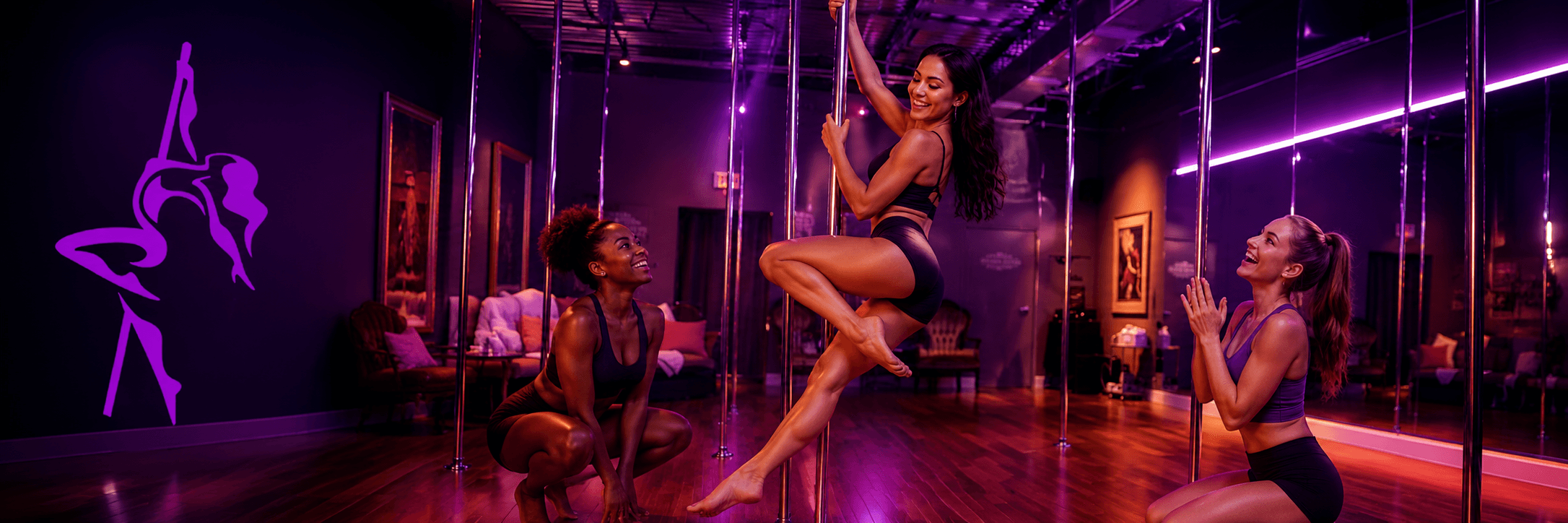
An attitude spin is a beginner pole spin where the dancer holds the pole with both hands, steps around it to build momentum, and lifts her inside leg into a bent-knee "attitude" shape while the outside leg extends behind her, so she rotates around the pole in a lifted, open-hipped position. If you have been searching "what is an attitude spin in pole dancing" after seeing a clip online this November 2026, this post is for you. It is one of the first spins many students learn, it looks elegant from the first attempt, and it quietly teaches skills that show up in nearly every spin that follows. Below, I will explain what it is, where it sits in a typical progression, what it trains, and how it is learned safely in a class.
WHAT IS AN ATTITUDE SPIN IN POLE DANCING
The name comes from the attitude position in ballet, where one leg is lifted with the knee bent rather than straight. On the pole, that bent leg is the inside leg, the one closest to the pole. The knee points outward and slightly up, the foot either points or flexes depending on the styling, and the thigh stays open rather than tucked in toward the pole.
The outside leg does something different. It extends long behind the body, toes pointed, creating a line that balances the bent inside leg. From the front, the shape looks a little like a dancer caught mid-leap: one knee bent and lifted, one leg reaching back, chest open, head often turned slightly away from the pole.
The hands make the spin possible. The inside hand holds high on the pole, roughly above head height, with the arm slightly bent rather than locked. The outside hand holds lower, somewhere around the chest or ribs, and helps steady the body. The dancer walks around the pole, pushes off the floor, and the momentum carries her through one or more rotations while she holds the shape.
On a static pole, the spin lasts as long as the momentum does, then slows to a controlled landing. On a spinning pole, the pole itself rotates, so the shape can be held longer with less push-off, which changes how the spin feels.
WHAT LEVEL IS THE ATTITUDE SPIN AND WHAT COMES BEFORE IT
In general terms, the attitude spin is a beginner spin. It usually appears early in a student's first weeks, alongside spins like the fireman and the chair, because it does not require an invert, a climb, or any aerial strength beyond what a new student can build quickly.
That said, "beginner" does not mean effortless. The attitude spin asks for more than a basic spin where both legs are tucked or hooked. The extended outside leg takes balance, and the open hip on the inside leg takes a little awareness of where your body is in space. Most students have already practiced a plain walk-around and a simpler two-hand spin before adding this shape.
Where it falls inside a specific studio's progression is something only your instructor can tell you. At Intice, levels run from Level 1 through Level 3+, and your instructor will place it where it fits for your class. If you want a sense of what classes look like before you arrive, read what to expect at your first pole dancing class.
WHAT DOES THE ATTITUDE SPIN TRAIN
Even a simple-looking spin does real work.
Grip and shoulder engagement come first. Holding your body weight through two hands while rotating trains the forearms and teaches the shoulders to stay active instead of hanging from the joint. This is one reason spins matter beyond how they look: they prepare the upper body for climbs and later moves. A study of 52 fitness pole dancers found that hand-grip strength and postural stability increased significantly with pole dance experience level, and the authors concluded regular practice can contribute to a significant increase in strength and improved postural stability. It was a small, observational study, but it matches what instructors see week to week.
Core control is next. Keeping the chest open and the hips steady while two legs do different things is a balance challenge, and the midsection is what holds it together.
Coordination and body awareness grow too. The attitude spin asks you to bend one knee, extend the other leg, turn your head, and point your toes, all while moving. Learning to do several things at once without thinking about each one is a skill that carries into every combination you learn later.
Confidence is the quiet benefit. A spin that looks graceful on the first or second class gives new students a real sense of what their bodies can do. Most students at Intice are spinning on their own within their first 1-2 classes, and the attitude spin is often one of the shapes they remember from that day.
WHAT FORM CUES HELP THE ATTITUDE SPIN FEEL CONTROLLED
These are the cues I repeat most often. They are not a substitute for an instructor watching you, but they will make sense once you have been coached through the spin in person.
Keep the top arm slightly bent and the shoulder pulled down away from the ear. Hanging on a straight, locked arm puts stress on the elbow and shoulder and makes the spin harder to control.
Build momentum from your step-around, not from yanking with your arms. The walk around the pole and the push off the back foot are what create the spin. The arms hold position; they do not throw you.
Lift the inside knee and open it outward. The most common shape error is tucking the bent leg in close to the pole, which collapses the position and often makes the body swing in awkwardly.
Extend the back leg with pointed toes. A soft, bent back leg reads as unfinished and throws off balance. Reach it long.
Keep your chest lifted and look slightly away from the pole. Looking down pulls the spine forward and pulls the spin off its axis.
Land with control. Lower the extended leg first, find the floor with a soft knee, and keep the hands on the pole until you are steady.
Across all of this, listen to your body. Stop immediately if you feel sharp pain anywhere, especially in the shoulder, elbow, or wrist. Skin discomfort and light bruising on the inner thigh or hands, which pole dancers call pole kisses, are common in the early weeks and fade as skin adapts. If you have an injury or a medical condition, check with your doctor before starting.
HOW DO YOU LEARN THE ATTITUDE SPIN SAFELY IN CLASS
The attitude spin belongs in a class with an instructor in the room, not in front of a mirror at home. An instructor checks your grip height, watches your top shoulder, and adjusts the shape while you are in it, which no video can do. She also decides when you are ready to add the extended leg, when to try it on spinning pole, and when to move on.
At Intice Dance Fitness in St. Petersburg, beginner spins are taught in a progression, with the plain walk-around and simpler two-hand spins coming first, and the instructor spotting students as they add shape and momentum. Students work in bare feet, in form-fitting shorts and a sports top, with no lotion on class day, because skin contact with the pole is what creates grip. If you want more individual attention on this spin or any other, private lessons let you work one-on-one with an instructor on exactly the piece that is giving you trouble.
KEY TAKEAWAY: The attitude spin is a beginner pole spin that lifts the inside leg into a bent-knee shape while the outside leg extends behind, and it trains grip, shoulder engagement, balance, and coordination that every later spin depends on. It looks graceful early, but it still deserves an instructor's eyes, and it is learned safely in a class.
If the attitude spin is the one that made you stop scrolling, come learn it with an instructor who will coach your grip, your shape, and your landing from the first attempt. Check the class schedule and drop in; no experience is needed, and the intro offer gives new students 2 weeks of unlimited classes for $59.
FAQ
Q: Can I try the attitude spin at home if I have a pole?
A: Learn it in a class first. An instructor needs to check your grip, your top shoulder, and your landing in real time before you practice it on your own, because small errors in arm position are what lead to elbow and shoulder strain. Once your instructor has coached you through it and confirmed your form, you can ask her how to practice it safely.
Q: Do I need to be flexible to do an attitude spin?
A: No. The bent inside knee and the extended back leg use a range of motion most people already have, and the shape improves as hip mobility and body awareness develop over time. Flexibility helps with styling, but it is not a requirement to start.
Q: Where can I learn the attitude spin near St. Petersburg?
A: Intice Dance Fitness at 2104 34th St S in St. Petersburg teaches beginner spins like the attitude spin in a structured progression with instructors spotting and correcting form, and the studio is open Mon-Sun, 6am-10pm, with actual class times listed on the schedule page. Drop-ins are always welcome, and the 2-week unlimited intro offer for $59 is available to new students who want to try several classes before deciding on a membership.
You Might Also Like