
What Is a Back Hook Spin in Pole Dancing? A Beginner Spin
What is a back hook spin in pole dancing? Learn what it looks like, how it differs from a front hook, what it builds, and how to learn it safely in class.
A back hook spin is a beginner pole spin in which you walk around the pole, hook your outside leg behind the pole at the back of the knee, extend the other leg forward, and let that hooked leg carry you around in a circle. If you have been searching what is a back hook spin in pole dancing after seeing it on social media this October 2026, you are looking at one of the first spins most students meet. It belongs firmly in the beginner family, and students often confuse it with its sibling, the front hook spin. This post compares the two so you can tell them apart and understand why the back hook deserves to be learned in a class, not from a video.
WHAT IS A BACK HOOK SPIN IN POLE DANCING
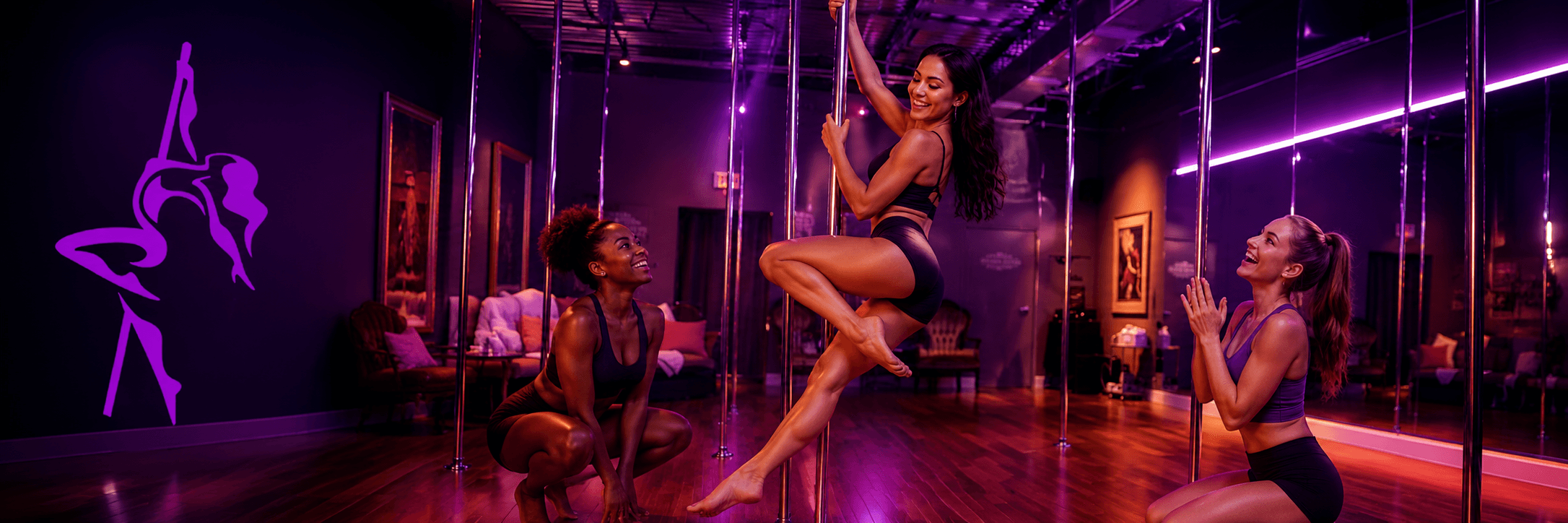
Picture a dancer standing beside the pole with her inside hand gripping it above her head. She walks around the pole, and as she picks up gentle momentum, her outside leg swings around behind the pole and hooks it in the crook of the knee. Her other leg points out in front of her, her chest lifts, and the whole shape rotates around the pole until she lowers to the floor.
The name tells you what to look for. The hook happens behind her, with the pole resting against the back of the knee. From the front, you see an open, lifted shape with the pole behind the body and the free leg reaching forward. It is a spin, not a trick, which means momentum carries the shape and the feet return to the ground within a single rotation or two.
HOW IS A BACK HOOK SPIN DIFFERENT FROM A FRONT HOOK SPIN
The two spins share a name, a grip, and a general entry, which is exactly why beginners mix them up. The difference is where the leg hooks.
In a front hook spin, the outside leg swings forward and hooks the pole in front of the body, with the pole against the inner knee or shin. The chest stays close to the pole and the free leg trails behind. The shape looks tucked and compact.
In a back hook spin, the outside leg wraps behind the pole instead, so the pole sits at the back of the knee. The body opens away from the pole, the free leg extends forward, and the shape looks longer and more exposed. Because the pole is behind you rather than in front of you, the back hook asks a little more of your arm engagement and your trust in the hook.
If you remember nothing else, remember this: front hook, pole in front of the leg; back hook, pole behind the leg. Watch a video again with that cue and the two will separate instantly.
WHAT LEVEL IS A BACK HOOK SPIN AND WHAT COMES BEFORE IT
The back hook is a beginner spin, usually introduced after a student has grown comfortable with a fireman spin or a front hook. Those earlier spins teach the walk-around, the hand placement, and the habit of keeping the shoulders active rather than hanging in the joint. Ask your instructor where the back hook falls within Intice's Level 1 through Level 3+ progression, because sequencing is tailored to how a group is moving on a given day.
Most students are spinning on their own within their first 1-2 classes, and the back hook is often one of the spins they are working toward in those early weeks. That does not mean it feels effortless. Beginner describes the prerequisites, not the sensation.
WHAT DOES A BACK HOOK SPIN BUILD IN YOUR BODY
Spins like this are strength work disguised as movement. Holding your body weight on a lifted arm trains grip, forearms, and the muscles around the shoulder blade. Hooking the leg and keeping it active builds hamstring and glute engagement. Extending the free leg with a pointed toe while the body rotates trains coordination and core control.
Grip is the quiet hero. A small study of 52 fitness pole dancers found that hand-grip strength and postural stability increased significantly with pole dance experience level, and the authors concluded regular practice can contribute to a significant increase in strength and improved postural stability. Every back hook you practice is part of that pattern.
Just as important, the back hook builds confidence. Letting your body open away from the pole and trusting a leg hook to hold you is a mental skill, and it is one you will need again and again as you progress.
WHAT FORM CUES SHOULD A BEGINNER KNOW
Your instructor will give you cues in real time, but here is the general shape to have in mind before class.
Keep your top arm strong and your shoulder pulled down and back rather than shrugged up toward your ear. The arm is working, not dangling.
Hook with the back of the knee, not the ankle or calf, and squeeze the leg into the pole. A soft, lazy hook slides.
Point the free leg forward with a lifted chest. The extended line is what makes the spin read as a back hook rather than a tangle.
Let momentum come from the walk, not from flinging yourself. A controlled entry gives a controlled exit.
Expect some pinch at the back of the knee. Skin discomfort and light bruising, the famous pole kisses, are common early on and fade as skin adapts. Sharp pain is a different story. Stop immediately if you feel it. If you have an injury or a medical condition, check with your doctor before your first class.
HOW DO YOU LEARN A BACK HOOK SPIN SAFELY IN CLASS
At Intice in St. Petersburg, this spin is taught in a group setting where an instructor checks your grip, watches your shoulder, and adjusts your hook before you commit to the rotation. Crash mats, a warm body, and a spotter nearby change how fast and how safely a beginner learns. Reading about a move prepares you; it does not replace someone watching you do it.
If you want focused attention on this one spin, private lessons let an instructor break it down at your pace. Nervous about walking in? This guide to what to expect at your first pole dancing class covers the practical details. Wear form-fitting shorts and a sports top, come in bare feet, skip jewelry, and leave lotion off on class day, because skin contact is what gives your leg hook its grip.
KEY TAKEAWAY: A back hook spin is a beginner spin where the outside leg hooks behind the pole and the body opens outward, in contrast to the tucked front hook; it is learned safely in class with an instructor who checks your grip, your hook, and your shoulder before you spin.
Come learn the back hook spin with an instructor who will cue you through every part of it, and feel the difference a trained eye makes. Check the class schedule and grab a spot; new students can try 2 weeks of unlimited classes for $59.
FAQ
Q: Can I try a back hook spin at home on my own pole?
A: Learn it in class first. An instructor catches the small errors, like a weak hook or a shrugged shoulder, that cause slips and strains, and a studio has mats and a spotter if something goes wrong. Once you have been taught the spin properly and cleared by your instructor, practicing it becomes a different conversation.
Q: Why does the back of my knee hurt during a back hook spin?
A: The pole presses into skin and soft tissue behind the knee, and in early classes that spot has not toughened up yet. Mild discomfort and light bruising are normal pole kisses that fade with time, but sharp or joint-level pain means stop and tell your instructor right away.
Q: Where can I learn a back hook spin near St. Pete?
A: Intice Dance Fitness is at 2104 34th St S in St. Petersburg, in the same plaza as Domino's Pizza at the opposite end, and the studio is open Mon-Sun, 6am-10pm. Drop-ins are always welcome with no experience needed, and the schedule page lists current class times and levels.
You Might Also Like