
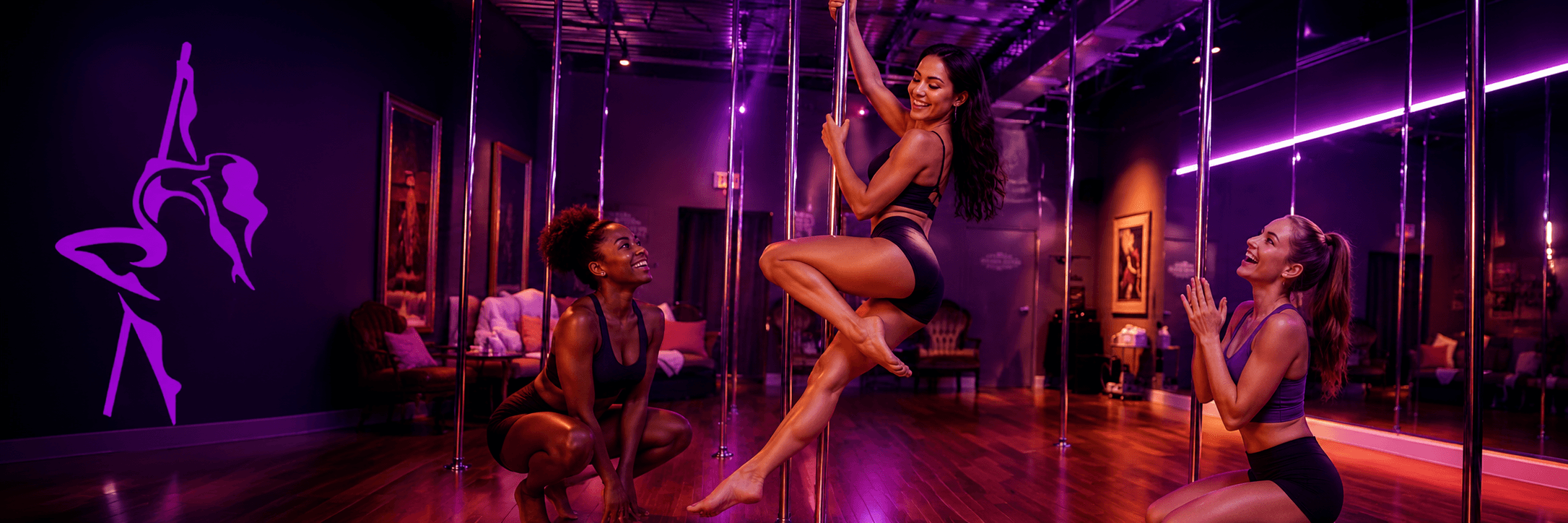
Can You Do Pole Dancing If You're Not Flexible? The Truth for Beginners
Think you need to be flexible to start pole dancing? Think again. Here's the truth about flexibility and pole fitness for beginners.
If you've been eyeing pole dancing classes this June 2026 but keep talking yourself out of it because you can barely touch your toes, you're not alone. Flexibility is one of the biggest concerns we hear from people who are curious about pole fitness but haven't taken the leap yet. The good news? It's also one of the biggest misconceptions holding people back from a workout they would absolutely love. Let's bust through a few common myths right now so you can walk into your first class with confidence instead of doubt.
MYTH 1: YOU NEED TO BE FLEXIBLE BEFORE YOU START POLE DANCING
This is probably the most widespread myth in the pole world, and it stops so many people before they even begin. Here's the truth: flexibility is something you build through pole dancing, not something you need to arrive with. When you first start, your focus will be on grip, basic spins, body awareness, and building strength. None of that requires you to fold yourself in half.
Think about it this way. Nobody expects a beginner swimmer to know how to do a flip turn before their first lesson. Pole dancing works the same way. Beginners start with foundational moves that are completely accessible to stiff, inflexible bodies. Over time, as your muscles warm up through regular practice and your range of motion improves, you'll naturally become more flexible. The pole teaches you. You don't come in already knowing everything.
At Intice Dance Fitness in St. Petersburg, our beginner classes are specifically designed to meet you exactly where you are, tight hamstrings and all.
MYTH 2: THE COOL MOVES ALL REQUIRE EXTREME FLEXIBILITY
When people scroll through pole dancing videos online, they see advanced performers doing jaw-dropping splits mid-air or bending into pretzel shapes on the pole. It's stunning, but it's also misleading if you're a beginner trying to gauge whether pole is for you.
The reality is that the most empowering and exciting beginner moves rely far more on grip strength, core engagement, and body control than on flexibility. Moves like the fireman spin, the chair spin, and basic climbs feel incredibly powerful to pull off and require zero flexibility to execute. Even as you advance, there are plenty of intermediate and advanced techniques that are built around strength and flow rather than extreme range of motion.
According to the American Council on Exercise, muscular strength and endurance are the primary fitness benefits developed through pole fitness training, with flexibility improvements coming as a secondary benefit over time. That means you're building the strength foundation first, and the flexibility follows naturally as your body adapts.
If you want to see what beginner-friendly pole dancing actually looks like before committing, check out our videos page to get a real feel for what happens in class.
MYTH 3: IF YOU'RE NOT FLEXIBLE, YOU'LL FALL BEHIND IN CLASS
This myth creates a lot of anxiety, especially for adults who haven't been in a class setting in years. The fear of being the least bendy person in the room is real, but it's also misplaced when it comes to pole fitness.
First, beginner pole classes are full of people at varying levels of flexibility. Some students are dancers with years of stretching behind them. Others are office workers who spend eight hours a day sitting at a desk and feel like their hips are made of concrete. Both of those people can have an incredible time in the same beginner class because the skills being taught don't require one body type or one range of motion.
Second, flexibility is genuinely trainable. Your body responds to consistent stretching and movement. Most students notice real improvements in their mobility within just a few weeks of regular pole classes because every session includes a proper warm-up and cool-down with targeted stretching. You're not just learning to pole dance. You're actively working on your flexibility every single class without it feeling like a chore.
And if you're someone who wants a little extra support as you build your foundation, private lessons are a great option to work at your own pace with one-on-one instructor attention. You can also browse our beginner pole dancing classes guide to understand exactly what to expect when you first walk in the door.
HOW TO SET YOURSELF UP FOR SUCCESS AS A BEGINNER
If you want to feel your best walking into your first class, here are a few simple things you can do. Start incorporating a short daily stretching routine, even just ten minutes in the morning, focusing on your hips, hamstrings, and shoulders. Come to class wearing shorts or fitted leggings that allow your instructor to see your body alignment, and avoid lotions on your hands and legs on class days since bare skin grip is essential on the pole.
Most importantly, arrive with an open mind and leave the comparison habit at the door. Pole dancing is deeply personal. Your progress is your own. Whether you can drop into a split or whether forward fold means staring at your kneecaps, you belong in that class and you will improve faster than you think.
KEY TAKEAWAY: You do not need to be flexible to start pole dancing. Flexibility is a result of consistent pole practice, not a prerequisite for it, and every beginner class at Intice Dance Fitness is designed to welcome you exactly as you are.
If you're ready to stop letting flexibility hold you back and start building real strength, confidence, and body control, we'd love to have you join us at Intice Dance Fitness in St. Pete. Check out our schedule and book your first class today, because your body is more ready than you think.
FAQ
Q: Do I need to stretch before my first pole dancing class?
A: It's always a good idea to arrive a few minutes early and do some light movement to warm up your body. Your instructor will lead a full warm-up at the start of class, so you don't need to do anything elaborate beforehand.
Q: Will pole dancing help me become more flexible over time?
A: Yes, absolutely. Regular pole dancing incorporates active stretching throughout every class, and most students notice meaningful improvements in their flexibility and range of motion within the first few weeks of consistent practice.
Q: What if I feel embarrassed about how stiff I am in class?
A: Beginner classes are full of people at all flexibility levels, and instructors at Intice Dance Fitness are trained to offer modifications so every student feels supported and successful. No one is judging how far you can stretch, only celebrating how hard you're working.
You Might Also Like