
What Is a Carousel Spin in Pole Dancing? Beginner Tips
Wondering what is a carousel spin in pole dancing? A pole instructor explains the shape, the level, the form cues, and how to learn it safely in class.
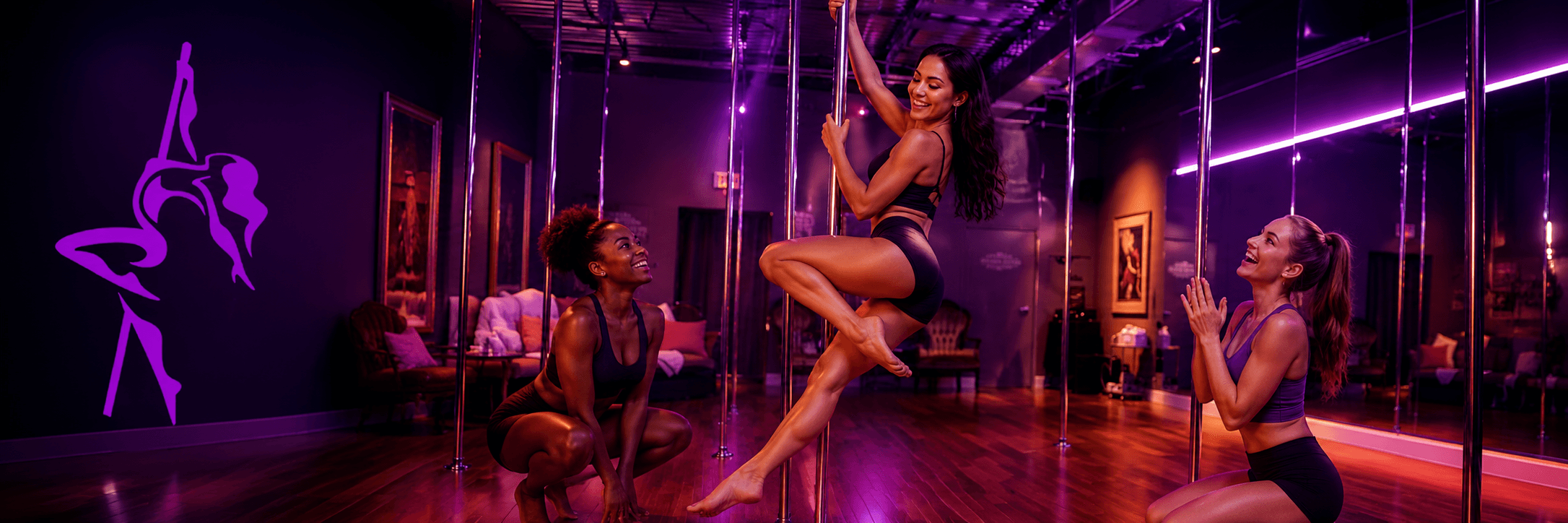
A carousel spin is a beginner pole spin in which you hold the pole with both hands, push off the floor, and lift your bent knees so your body circles the pole in a compact, seated shape, like a rider on a carousel horse. If you have been searching "what is a carousel spin in pole dancing" after seeing it on social media this November 2026, you are looking at one of the earliest spins most new students meet. It sits firmly in the beginner family, it looks graceful once the shape clicks, and it teaches lessons about grip, momentum, and body position that carry into nearly every spin that follows.
Below are the points I cover when I teach it, in the order I teach them.
WHAT IS A CAROUSEL SPIN IN POLE DANCING
1. It is a tucked, two-handed spin with a seated look.
Picture someone sitting side-saddle in the air with knees bent, feet together, and toes pointed, while the whole shape rotates around the pole. Both hands stay on the pole throughout. Nothing goes upside down and nothing leaves the ground until the student is already moving, which is a big part of why it is taught so early.
2. There are small variations, and your instructor will show you Intice's version.
Some studios cue the knees pulled tight toward the chest, others cue a slightly more open seated line with the legs angled out to the side. Hand placement can also differ slightly. None of these are wrong. Learn the version your instructor teaches first, then explore the others once the base feels reliable.
WHAT LEVEL IS THE CAROUSEL SPIN AND WHAT COMES BEFORE IT
3. It is a beginner spin, usually taught alongside the other foundational spins.
The carousel spin generally belongs in the same group as the fireman and chair spins. It is not an invert, it does not require flexibility, and it does not require you to let go with either hand. Ask your instructor where it falls in Intice's Level 1 through Level 3+ progression, since every studio orders its curriculum a little differently.
4. Walking around the pole and basic grip come first.
Before any spin, you learn how to walk around the pole with a clean line, how to place your hands so your shoulders stay engaged, and how to control your landing. Those simple drills are what turn a spin from a scary drop into a controlled movement. Most students are spinning on their own within their first 1-2 classes, though how it feels on day one varies from person to person.
WHAT DOES THE CAROUSEL SPIN BUILD IN YOUR BODY
5. Grip and shoulder engagement.
Because both hands hold the weight of the body, this spin asks your hands, forearms, and the muscles around your shoulder blades to work together. You feel it in the grip first, then in the upper back as you learn to keep your shoulders pulled down rather than letting them creep toward your ears. A small observational study of 52 fitness pole dancers found that hand-grip strength and postural stability increased significantly with pole dance experience level, and the authors concluded regular practice can contribute to a significant increase in strength and improved postural stability. The carousel spin is one of the places that work begins.
6. Core control and body awareness.
Lifting the knees and holding them still while rotating uses the deep abdominal muscles more than people expect. It also trains you to feel where your body is in space while moving, which is the skill that makes later spins look calm instead of frantic.
WHAT FORM CUES HELP A BEGINNER CAROUSEL SPIN
7. Keep both arms engaged, not locked and not slack.
The most common thing I correct is a student hanging from a fully straight arm with a relaxed shoulder. Think of pressing the shoulders down and slightly back, with a soft bend in the elbows, so the muscles carry the load rather than the joints. If anything feels sharp in the shoulder, wrist, or elbow, stop and tell your instructor.
8. Momentum comes from the walk, not from jumping.
Take a few walking steps around the pole, let the outside leg swing, and lift the knees as the body is already turning. Trying to jump into the spin from standing still usually produces a short, awkward rotation and a hard landing.
9. Knees together, toes pointed, eyes up.
Squeeze the knees toward each other, point the feet, and look slightly ahead of where you are traveling. Those three small cues are what turn the shape from a tuck into something that reads as a carousel. Expect a bit of skin discomfort where the inner thighs or knees brush the pole, and expect some light bruising, the "pole kisses" every new dancer collects. That is normal early on. Sharp pain is not, and it means stop.
HOW IS THE CAROUSEL SPIN TAUGHT SAFELY IN CLASS
10. Progression, spotting, and the right setup.
At Intice in St. Petersburg, this spin is introduced only after the grip and walking drills are solid, and an instructor stands close during early attempts to guide the landing and correct hand placement in real time. Crash mats are available while you are learning to control the exit. You will also be reminded of the basics that make the spin possible in the first place: bare feet, form-fitting shorts and a sports top, no jewelry, and no lotion on class day, because skin contact is what gives you grip. If you want more detail on that, read what to wear to pole dancing class before your first visit. None of this means the spin will feel effortless the first time. It usually does not. But it is learnable, it is forgiving compared with what comes later, and a good instructor can usually fix the one or two things holding a student back within a single class. If you are curious how the levels are structured, the class types and levels page explains what is offered.
Before you start, check with your doctor if you have an injury or a medical condition, particularly anything involving the shoulders, wrists, or back. An instructor can adapt drills, but cannot diagnose or clear you to train.
KEY TAKEAWAY: The carousel spin is a beginner, two-handed, tucked spin that teaches grip, shoulder engagement, and momentum control, and the right place to learn it is in a class with an instructor spotting your first attempts and correcting your form.
If the carousel spin is the move that caught your eye, come learn it the right way with an instructor beside you. Drop-ins are always welcome, no experience is needed, and you can find the current class times on the schedule page.
FAQ
Q: Can I try the carousel spin at home on my own pole?
A: Learn it in class first. The spin itself is beginner level, but hand placement, shoulder engagement, and the landing are the parts that cause injuries when they are guessed at, and those are exactly the things an instructor corrects in person. Once you have the mechanics and the exit under control in a class setting, your instructor can tell you what is reasonable to practice.
Q: Do I need upper body strength before I can do a carousel spin?
A: Not a specific amount. The spin is taught in a way that builds the strength as you go, starting with grip and walking drills that prepare the hands and shoulders. Students arrive at Intice in St. Petersburg with every kind of fitness background, and the progression is designed to meet them where they are.
Q: Why do my inner thighs sting after practicing this spin?
A: Skin contact with the pole is what creates grip, and in the carousel spin the inner knees or thighs can brush the pole during the tuck. Mild stinging and light bruising are common in the first weeks and usually fade as the skin adjusts. Sharp pain, numbness, or swelling is different and means you should stop and speak with your instructor and, if it persists, a doctor.
You Might Also Like