
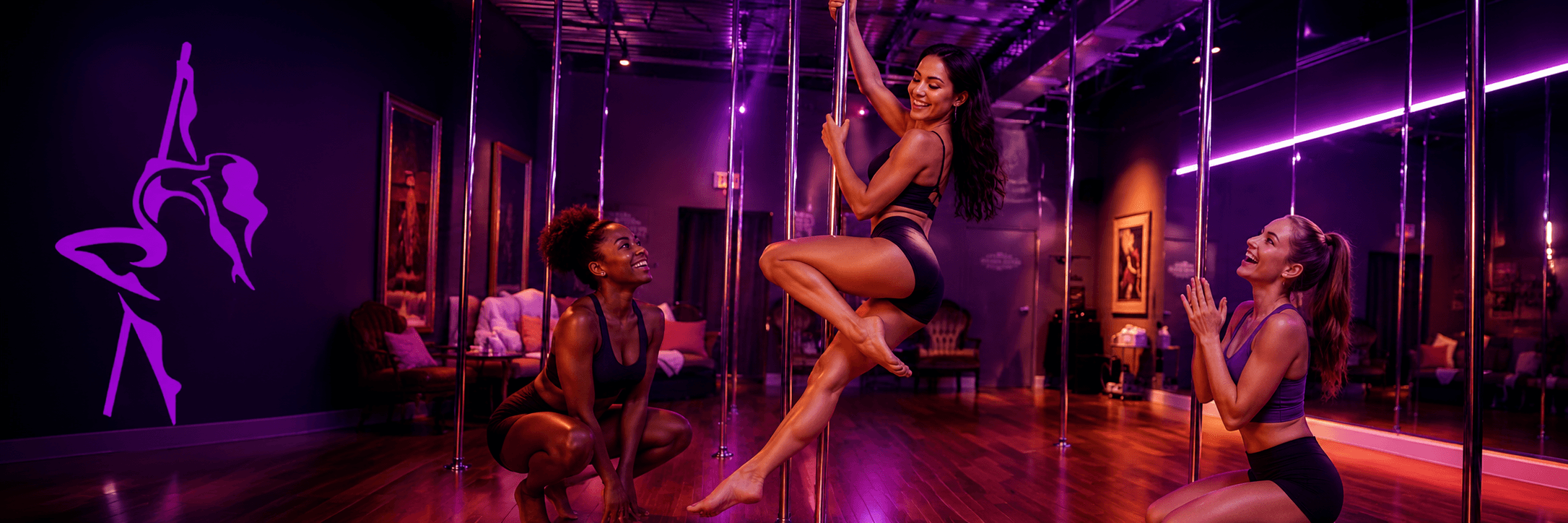
How to Break Through a Fitness Plateau Without More Cardio
Stuck in a fitness rut? Learn why more cardio isn't the answer and how pole dancing at Intice Dance Fitness can reignite your results.
If you've been grinding away at the same workouts and wondering why nothing is changing, you're not alone — and if June 2026 is the month you finally decide to do something about it, this post is for you. Breaking through a fitness plateau is one of the most frustrating challenges women face, and the most common advice — do more cardio — is also one of the least effective solutions. Before you add another 30 minutes on the treadmill, let's bust a few myths that might be keeping you stuck.
MYTH 1: YOU JUST NEED TO WORK HARDER TO SEE RESULTS AGAIN
This is the trap most women fall into. You hit a wall, so you push harder — longer runs, more HIIT classes, extra sessions per week. But here's what's actually happening: your body is incredibly smart. Once it adapts to a stimulus, it stops responding to it. A study published in the Journal of Strength and Conditioning Research found that muscular adaptation to repetitive exercise patterns can plateau within as little as six to eight weeks, meaning the workout that once challenged you is now just maintenance. Working harder at the same thing doesn't break a plateau — it just deepens the rut. What your body actually craves is novelty, variety, and movement patterns it hasn't experienced before.
MYTH 2: CARDIO IS THE ONLY WAY TO BURN FAT AND CHANGE YOUR BODY
Cardio has been sold to women as the gold standard for decades, but the research tells a more nuanced story. What truly transforms your body composition is building lean muscle, improving coordination, and engaging your entire neuromuscular system in new ways. Pole dancing does exactly that. It combines strength training, flexibility work, coordination challenges, and full-body engagement in a single session — and because the movements are constantly evolving as you progress through levels, your body never fully adapts. You're not doing the same routine every week. You're learning new spins, climbs, floor work, and transitions that force your muscles to respond in entirely new ways. If you've been curious about what this kind of training actually looks like, explore the class offerings at Intice Dance Fitness to see how structured and progressive the programming really is.
MYTH 3: IF YOUR CURRENT WORKOUT ISN'T WORKING, THE PROBLEM IS YOUR EFFORT
This one does the most damage. Women internalize plateaus as personal failures — evidence that they're not disciplined enough, not motivated enough, not trying hard enough. But a plateau is not a reflection of your character. It's a physiological signal. Your nervous system, your muscles, and your metabolism are all telling you the same thing: change the input. The problem isn't your effort. The problem is the stimulus. When you walk into a pole dancing class for the first time, you are giving your body a completely new stimulus — grip strength, shoulder stability, hip mobility, core control, and spatial awareness all get activated simultaneously. The learning curve itself becomes the plateau-breaker. Because you're a beginner at something new, your body is constantly being challenged without you even having to think about it.
WHAT ACTUALLY BREAKS A FITNESS PLATEAU
So what does work? Here's the honest answer: progressive skill-based movement. When you're working toward a goal that requires coordination, strength, and artistry — not just calorie burn — your body and mind stay fully engaged. Pole dancing gives you a ladder of achievement. You move from beginner spins to inverts to more advanced combos, and every new skill requires your body to recruit muscles differently and fire neural pathways it hasn't used before. That's not just physically effective — it's deeply motivating. You stop chasing a number on the scale and start chasing what your body can do.
At Intice Dance Fitness in St. Petersburg, the programming is designed to keep you progressing. Instructors guide you through skill-based levels so you're never bored, never stuck doing the same thing, and never left wondering what comes next. The environment is also something cardio machines simply can't replicate — a community of women who are genuinely invested in each other's growth. That social layer matters more than most fitness advice acknowledges. Accountability and belonging are powerful motivators, and they're built into every class. If you're ready to stop spinning your wheels and start actually moving forward, check the current class schedule and book your first session. The hardest part is walking in the door. After that, the plateau starts to crack. You can also read more about the best fun workout classes in St. Petersburg to see how Intice stacks up against other options in the area.
KEY TAKEAWAY: More cardio is rarely the solution to a fitness plateau — your body needs a new, progressive stimulus, and skill-based movement like pole dancing delivers exactly that while keeping you motivated and engaged long-term.
If you're done white-knuckling your way through workouts that aren't working, Intice Dance Fitness is ready to show you a different way. Come in, try something new, and let your body surprise you.
FAQ
Q: How quickly can I break through a fitness plateau with pole dancing?
A: Most women notice a difference within the first few classes simply because the movements are so new and challenging to their bodies. Consistent attendance over four to six weeks typically produces visible strength and body composition changes.
Q: Do I need to be fit or flexible before starting pole dancing classes?
A: Absolutely not. Intice Dance Fitness welcomes complete beginners at every fitness level, and instructors modify movements to meet you where you are. Flexibility and strength build naturally over time as part of the process.
Q: Is pole dancing actually a good strength workout, or is it mostly cardio?
A: Pole dancing is primarily a strength and coordination workout. It builds significant upper body, core, and grip strength while also improving flexibility and body awareness — making it one of the most complete full-body training modalities available.
You Might Also Like