
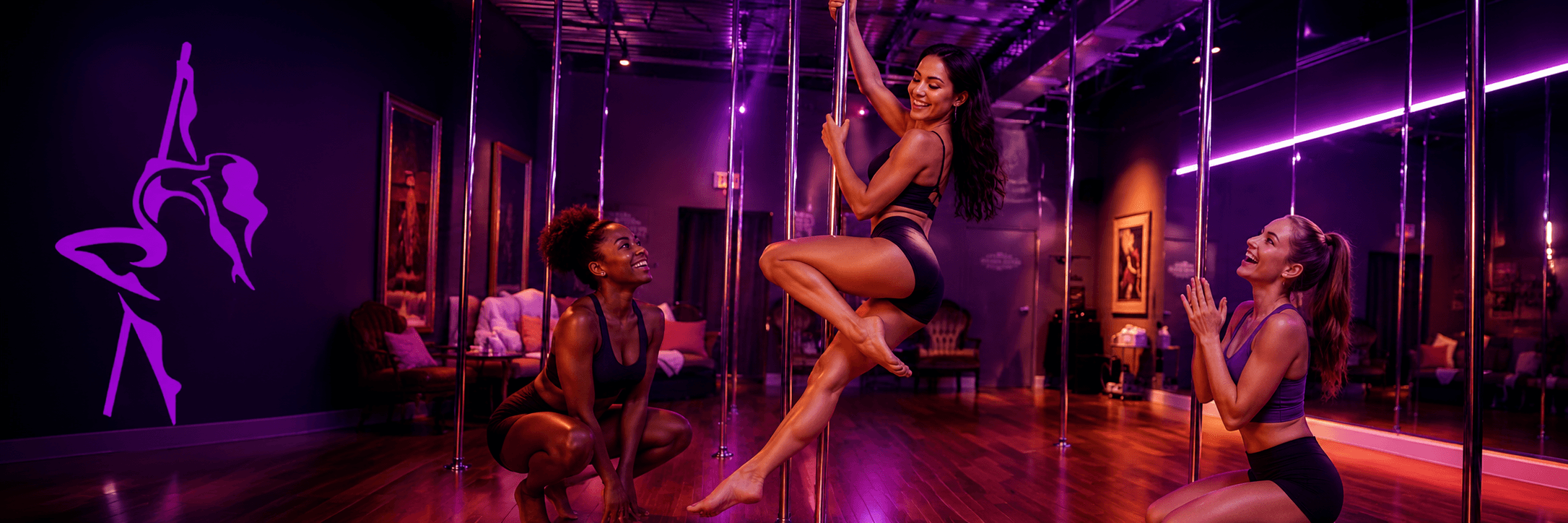
Is Pole Dancing Better Than Pilates for Toning? A Step-by-Step Guide to Choosing Your Workout
Wondering if pole dancing beats pilates for toning? Follow this step-by-step guide to find out which workout will sculpt your body faster.
If you've been asking yourself "is pole dancing better than pilates for toning?" this July 2026, you're not alone. Both workouts have devoted followings, both promise a sculpted, stronger body, and both look completely different from the treadmill grind most of us have grown tired of. But when your main goal is visible muscle tone — defined arms, a lifted core, sculpted legs — the two are not created equal. Instead of giving you a vague "it depends," we're going to walk you through a step-by-step process for figuring out which workout actually delivers the toning results you want. Grab a coffee, and let's break it down together.
STEP 1 DEFINE WHAT TONING ACTUALLY MEANS FOR YOUR BODY
Before you can compare pole dancing and pilates, you need to get honest about what "toning" means to you. In fitness terms, toning is really two things happening at once: building lean muscle and reducing the layer of body fat that covers it. That means the best toning workout is one that challenges your muscles enough to grow them while also burning enough calories to reveal them.
Here's where the first big difference shows up. Pilates is primarily a low-intensity, controlled-movement practice. It's fantastic for core stability, posture, and muscular endurance, but most mat pilates classes involve little to no external resistance beyond your own body weight in supported positions. Pole dancing, on the other hand, requires you to lift, hold, and move your entire body weight against gravity — often with just your arms and core. According to the American Council on Exercise, bodyweight resistance training that progressively increases in difficulty is one of the most effective ways to build lean muscle, and pole fitness is essentially a progressive bodyweight program disguised as dance.
So step one is simple: write down your goal. If it's "feel more flexible and improve posture," pilates holds its own. If it's "see real muscle definition in my arms, shoulders, back, and core," keep reading — pole is about to pull ahead.
STEP 2 COMPARE HOW EACH WORKOUT LOADS YOUR MUSCLES
Now let's look at the mechanics, because this is where the toning question really gets answered.
In a typical pilates class, you'll perform controlled sequences like the hundred, leg circles, and roll-ups. These movements fire your deep core muscles and improve mind-muscle connection. The challenge is real, but the resistance stays relatively constant. Your body adapts within a few months, and without added load, muscle growth tends to plateau.
Pole dancing works differently. In your first few classes, you'll learn spins and basic climbs that already demand more upper-body pulling strength than most women have ever trained. As you progress, the moves get harder — inverts, holds, and combos that function like weighted pull-ups, hanging leg raises, and isometric planks all rolled into one. The pole itself becomes your resistance machine, and the "weight" you're lifting is your entire body. That built-in progressive overload is exactly what creates visible tone in your arms, shoulders, lats, obliques, and thighs.
There's also the cardio factor. Pole routines link strength moves with dance flow, which keeps your heart rate elevated and burns significantly more calories per session than a mat pilates class. If you're curious about the numbers, we broke it all down in our post on how many calories pole dancing burns — and the results surprise most people.
STEP 3 FACTOR IN CONSISTENCY BECAUSE THE BEST WORKOUT IS THE ONE YOU KEEP DOING
Here's the step almost everyone skips: no workout tones your body if you stop showing up. Pilates is wonderful, but many people describe it as calming rather than exciting — and for some personalities, that makes it easy to skip when life gets busy.
Pole dancing has a secret weapon: it's addictive in the best way. Every class gives you a new trick to chase, a new spin to master, a small win you can feel proud of. That gamified progression keeps people coming back two, three, even four times a week without it ever feeling like a chore. When your workout doubles as a skill you're genuinely excited to learn, consistency stops being a battle — and consistency is what transforms bodies.
At our studio, we see this play out constantly. Students who couldn't stick with a gym routine for a month suddenly become the people who never miss a class. Our instructors at Intice Dance Fitness build every beginner up from zero, so you're never thrown into moves you're not ready for. You just keep leveling up, and your muscle tone levels up with you.
STEP 4 TEST BOTH AND LET YOUR RESULTS DECIDE
The final step is the most practical one: try it. Reading comparisons is helpful, but your body will tell you the truth within a few weeks. Take a pilates class, take a beginner pole class, and pay attention to three things — how sore your muscles are the next day (a sign they were genuinely challenged), how elevated your heart rate got during class, and how excited you are to come back.
Most women who do this experiment tell us the same thing: pilates felt nice, but pole felt like a full-body event. Their arms shook, their core lit up, and they left grinning. If you want to dive deeper into how the two stack up, we've written a full comparison on whether pole dancing is better than pilates that covers flexibility, strength, and fun factor side by side.
And here's the honest truth: you don't actually have to choose forever. Plenty of our students use pilates as recovery work while pole handles the heavy lifting — literally. But if you're picking one workout to be your toning engine, pole dancing's combination of progressive resistance, cardio, and sheer fun makes it the stronger choice for most women.
KEY TAKEAWAY: For visible muscle tone, pole dancing edges out pilates because it combines progressive full-bodyweight resistance with calorie-burning cardio — and it's fun enough that you'll actually stay consistent long enough to see results.
Ready to feel the difference for yourself? Book your first beginner class at Intice Dance Fitness in St. Petersburg and discover why pole is the toning workout you'll never want to quit.
FAQ
Q: Do I need to be strong or fit before starting pole dancing?
A: Not at all — beginner pole classes are designed to build your strength from zero. The pole itself becomes your training tool, and every class progressively develops the muscles you need. Most students are shocked by how quickly their strength improves.
Q: How soon will I see toning results from pole dancing?
A: Most consistent students notice firmer arms, shoulders, and core within four to eight weeks of attending two to three classes per week. Visible definition typically follows in two to three months as lean muscle builds and endurance improves.
Q: Can I do both pole dancing and pilates together?
A: Absolutely, and many of our students do. Pilates makes an excellent recovery and mobility complement to pole's strength-focused training. Using pole as your primary toning workout and pilates for active recovery is a fantastic combination.
You Might Also Like