
What Is a Jamilla Pole Move? A Clear Beginner Explainer
What is a jamilla pole move? A clear look at this aerial side hold, what comes before it, and why it is learned in class with an instructor.
A jamilla is an aerial pole hold in which the dancer grips the pole with both hands, turns her body side-on to it, and extends her legs away from the pole in a clean, floating line. If you typed "what is a jamilla pole move" into a search bar after spotting one on social media, you are in good company this November 2026. It is generally considered an intermediate-level trick, and it looks far calmer than it feels. It matters because it teaches a dancer to hold her own weight off the floor with control.
WHAT IS A JAMILLA POLE MOVE AND WHAT DOES IT LOOK LIKE
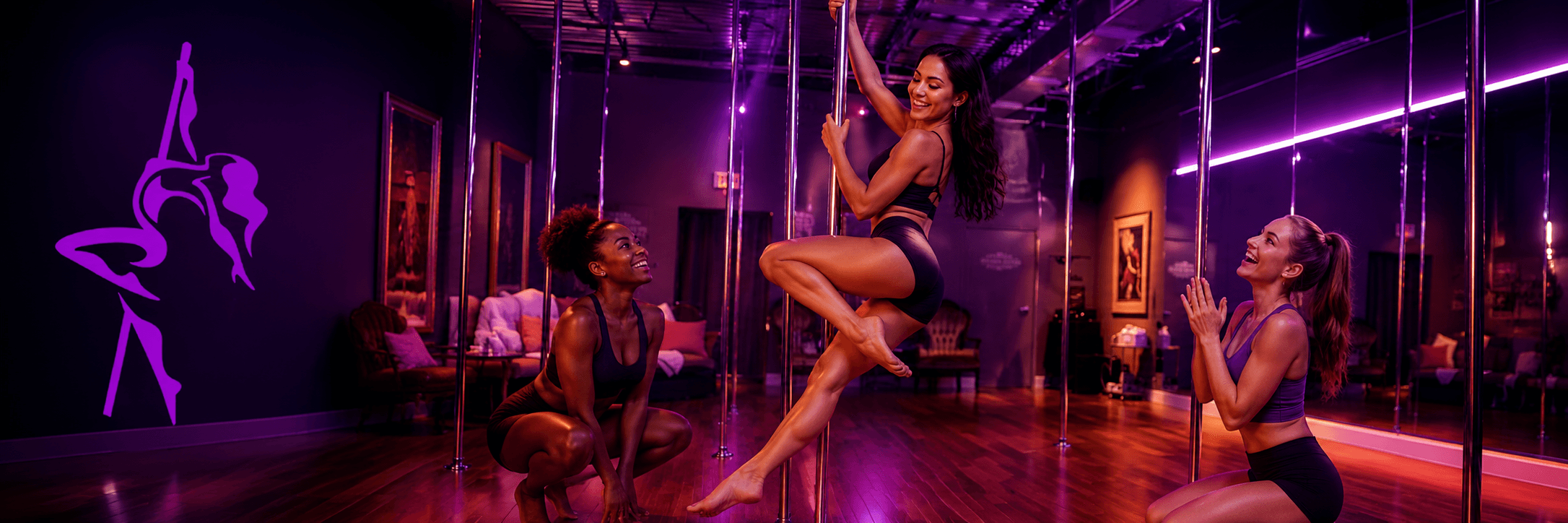
Picture a dancer up on the pole with her body turned sideways rather than facing it. Her hands hold the pole at different heights, her hip sits close beside the pole, and her legs reach out to the side, often in a pike or an open V shape.
The overall effect is that she seems to be sitting in mid-air next to the pole. Her chest stays open, her shoulders look strong and settled, and her toes are pointed.
You may also hear this shape called an apprentice. Some studios and instructors use that name for the same or a very similar hold, so do not be thrown if you hear both.
WHAT LEVEL IS A JAMILLA AND WHAT COMES BEFORE IT
In general terms, the jamilla sits in intermediate territory. It is not a first-class move, and it is not usually among the most advanced tricks either. Every studio organizes its curriculum a little differently, so the best answer comes from asking your instructor where it falls in the Level 1 through Level 3+ progression at Intice Dance Fitness in St. Petersburg.
What typically comes before it is a solid foundation of aerial basics. A dancer usually needs to be comfortable getting up the pole and staying there, and comfortable holding her body weight through her hands and shoulders. She also needs to know how to keep her shoulders engaged instead of hanging loosely from her joints.
Core control matters too. Holding the legs out to the side asks a lot of the abdominals and hip flexors, and that strength is built gradually through conditioning and simpler shapes.
Nobody arrives with all of this on day one. It is built class by class, which is exactly what a level system is for.
WHAT DOES A JAMILLA BUILD IN YOUR BODY
This hold trains grip, shoulder stability, and core strength together. The hands and forearms work hard to keep the dancer in place, the shoulders and back stabilize the upper body, and the midsection holds the legs in their line.
Grip is something pole develops over time. Published in the Journal of Human Kinetics in 2016, a study of 52 fitness pole dancers found that hand-grip strength and postural stability increased significantly with pole dance experience level, and the authors concluded regular practice can contribute to a significant increase in strength and improved postural stability. It was a small, observational study, but it matches what instructors see as students progress. If you want to understand how that foundation gets built, our post on upper body and grip strength in pole is a helpful companion read.
The jamilla also trains body awareness. A dancer learns where her hips are in relation to the pole and how to stay lifted while extending her legs. And there is the confidence that comes from holding a shape in the air that once looked impossible.
WHAT DO PEOPLE GET WRONG ABOUT THE JAMILLA
The first misconception is that it is a beginner trick because the dancer is not upside down. Being upright does not make a move gentle. In a jamilla the hands, wrists, and shoulders carry real load, and if that load is taken with poor positioning or before the body is ready, those joints can be strained.
The second misconception is that it is all arm strength. Students who try to muscle through with their arms alone tire quickly and lose the shape. The hold depends on the whole body working together: engaged shoulders, an active core, and correct placement of the body against the pole. Placement is very hard to judge on yourself, and it is one of the main things an instructor checks.
The third misconception is that you need extreme flexibility. Hamstring flexibility can make the leg line look more polished, but the heart of this move is strength and positioning. Many dancers start with a less extended version and refine the line over time.
One more thing gets misread online. A calm face in a video tells you nothing about the effort involved, because the dancer has usually trained that hold for a long time before filming it.
HOW IS A JAMILLA LEARNED SAFELY IN CLASS
This is a move that must be learned in person with a qualified instructor, with spotting and crash mats in place. It should never be attempted alone or at home, and no article or video replaces that. I am deliberately not giving you steps here, because written steps cannot see your shoulders or catch you.
In our studio, an instructor builds toward a trick like this through progressions. That means conditioning drills, preparatory shapes, and supported attempts with a spotter before a student holds anything on her own. She watches your alignment, adjusts your positioning, and tells you honestly when your body is ready and when it needs more time.
If you want focused help with a specific trick, private lessons give you one-on-one attention.
A few safety notes apply to everything in pole:
- Stop if you feel sharp pain.
- Skin discomfort and light bruising, often called pole kisses, are common early on and usually ease as your skin adapts.
- If you have an injury or a medical condition, check with a doctor before starting.
Progress varies from person to person, and there is no deadline. Students who attend 2-3 classes per week progress noticeably faster than those who attend once a week, but your instructor sets the pace based on what she sees.
KEY TAKEAWAY: The jamilla is an intermediate aerial hold that depends on grip, shoulder engagement, and core control working together. It is learned safely in class with an instructor, spotting, crash mats, and proper progression, never alone at home.
If the jamilla caught your eye, come start building toward it with an instructor who can guide you there step by step. Drop-ins are always welcome and no experience is needed, so find a class that suits you on our schedule page.
FAQ
Q: Can I try a jamilla at home if I have a pole?
A: Please learn it in class first. It is an aerial move that puts real load on the wrists and shoulders, and it needs a qualified instructor, spotting, and crash mats. Without someone watching your positioning, small errors can lead to falls or strain.
Q: Do I need to be strong before I start working toward a jamilla?
A: No, you build the strength as you go. Beginners at Intice in St. Petersburg start with foundational classes, and your instructor will tell you when a move like this fits your progression. No experience is needed to walk in the door.
Q: Is a jamilla the same thing as an apprentice?
A: Many studios use the two names for the same or a very similar side-on aerial hold. Terminology varies between instructors and regions, so ask your instructor which name she uses and what shape she means by it.
You Might Also Like