
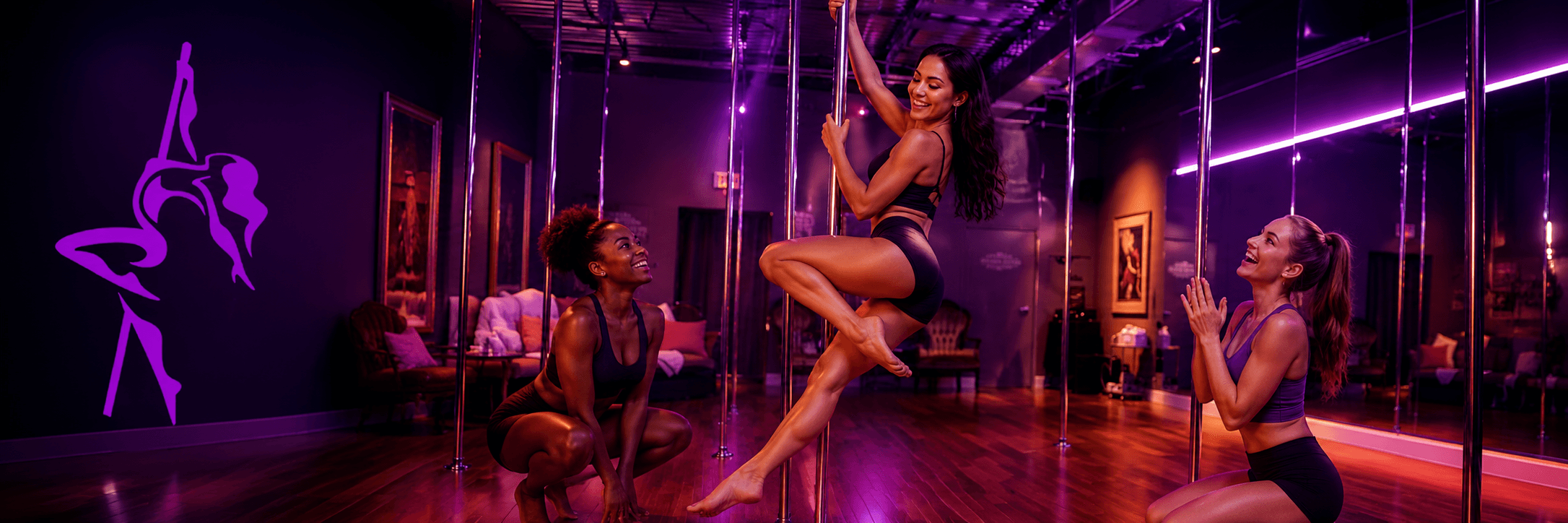
What Is Exotic Pole Dancing? A Beginner's Guide
Exotic pole dancing is the sensual, dance-first style of pole, built on flow, floorwork and heels. Here is what it means and how beginners start.
As of November 2026, exotic pole dancing is the dance-first, sensual style of pole: it puts flow, musicality, floorwork and movement in heels ahead of big acrobatic tricks. If you have seen a routine that looked more like a slow, deliberate dance around and beneath the pole than a gymnastics display, it was probably exotic. It is one of several recognized styles of pole, and it is often the one that makes people curious enough to book a first class.
What exotic pole dancing actually is
Pole dance as a whole combines dance and acrobatics centered around a vertical pole. Over time the discipline has split into styles, and that same reference lists four of them: pole sport, pole art, exotic pole and pole theatre. Exotic is the category where the sensual side of pole is expressed most openly.
The clearest way to understand it is by contrast. Sport-style pole is judged on technical tricks and athletic execution. Exotic events, as one guide to exotic competitions puts it, celebrate "artistry, musicality, flow, floorwork, and the expressive power of movement in heels." In an exotic routine the pole is a dance partner as much as a piece of equipment, and a lot of the dancing happens at its base and on the floor.
The main styles within exotic
Competition organizers split exotic into categories. The names are worth knowing even if you never plan to compete, because instructors use them to describe a class or a piece of choreography.
- Exotic flow is described as smooth, continuous movement and musicality. It is often considered the most accessible category for people competing for the first time.
- Exotic hard adds power moves, acrobatic floorwork and athletic tricks performed in heels.
- Old school is built on classic strip-style movement and traditional exotic technique.
- Exotic theatre combines exotic movement with theatrical performance and storytelling.
These are style labels, not an official difficulty scale. Where a particular move or combination sits for you is a question for your instructor, who can tell you where it falls in the Level 1 to 3+ progression.
Heels, floorwork and flow
Three things show up again and again in this style.
Heels. Exotic is closely associated with platform heels, and dancing in them is a skill of its own. Dance Magazine describes heels dance as a fusion of styles performed to popular music in stilettos of three inches, four inches or higher, and one teacher it quotes admits the work is "really hard." The same article says "it can take years to perfect the technique." Nobody expects a new student to arrive knowing how. The usual beginner kit for pole is shorts, a sports top, bare feet and no lotion on your skin. Whether and when heels come into it is something to ask your instructor before you buy a pair.
Floorwork. This is the movement that happens on the floor around the base of the pole, and the transitions that connect it to standing and to the pole itself. In competition, moving smoothly between standing, pole and floor is part of what is judged. Light bruising is common in the early weeks of any pole training, and floorwork is no exception.
Flow. Flow means linking movements so that one runs into the next in time with the music, instead of hitting a series of separate poses. It is the quality that makes exotic look unhurried.
Is it a real workout?
It is fair to ask, because the style looks so controlled. The best evidence available is about pole classes in general, not exotic in particular. A 2019 study in the Journal of Strength and Conditioning Research followed a small group of advanced-level amateur dancers through hour-long classes and concluded that a pole class "can be classified as a moderate-intensity cardiorespiratory exercise." That is one study of experienced dancers, so treat it as a guide and not as a promise about your first month.
How a beginner starts
Start with the basics of pole before the style. Poles have two modes, spinning and static, and static is the one regularly used when pole is first taught. A beginner class is where you meet grip, walks around the pole and simple spins, which are the raw material of exotic choreography. If you have never set foot in a studio, read what to expect at your first pole dancing class first.
At Intice Dance Fitness in St. Petersburg, the simplest route is to look through the classes we offer, come to a beginner-level session, and tell your instructor that exotic is what drew you in. They can point you toward the right next step for your level.
A few safety rules apply to every style of pole and matter even more once heels and floorwork are involved. Stop if you feel sharp pain. If you have an injury or a medical condition, see your doctor before you start. Advanced floorwork, and anything that takes you upside down, is learned in person with an instructor, spotting and crash mats, never from a video.
KEY TAKEAWAY: Exotic pole dancing is the sensual, dance-led style of pole built on flow, floorwork and heels. It is a recognized style with its own categories, and beginners get there by learning pole basics in class first.
Curious enough to try it? Check the class schedule and book a beginner session to start with the basics.
Common questions
Do I have to wear heels to do exotic pole?
Heels are closely associated with the style, but dancing in them is a separate skill that takes time to build. Ask your instructor at Intice in St. Petersburg whether you need them for the class you are booking.
Is exotic pole the same as stripping?
One of its categories, old school, is built on classic strip-style movement, so the connection is real. Today exotic is also taught in studios and judged in competitions as a dance style in its own right, alongside pole sport, pole art and pole theatre.
Can I learn exotic pole at home from videos?
Watching is a fine way to get to know the style. Doing it is different: floorwork in heels and any inverted or acrobatic move should be learned in person, with an instructor, spotting and crash mats. Stop on sharp pain, and see a doctor first if you have an injury or a condition.
You Might Also Like